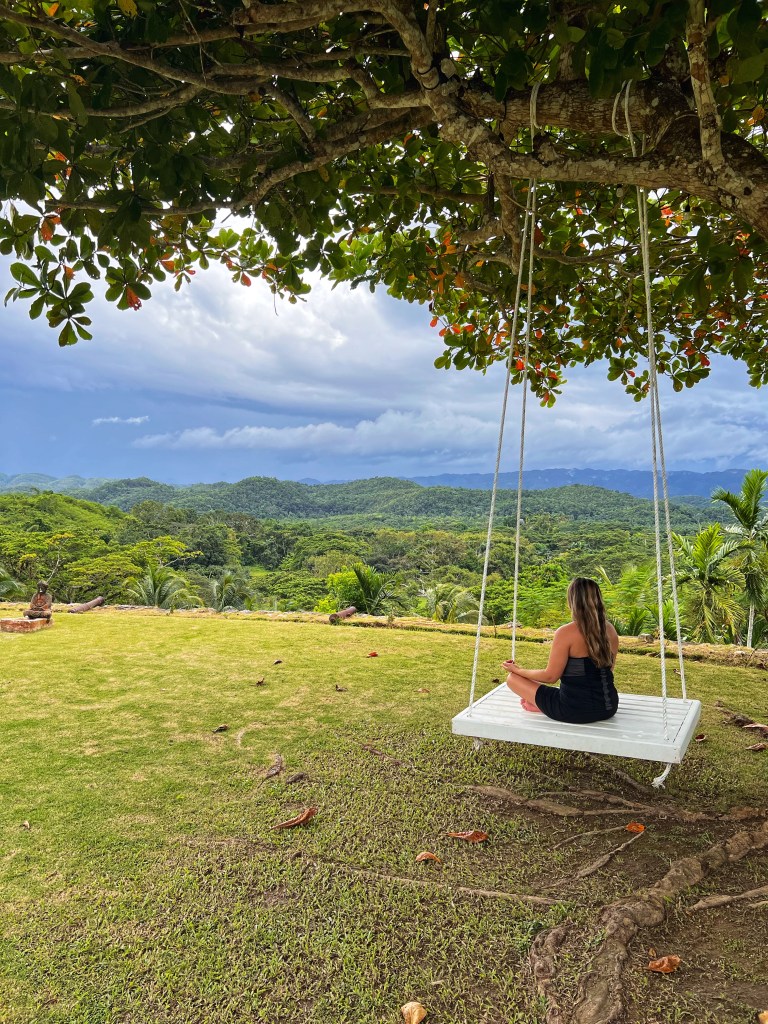
Travels for Mushroom Chocolate: My Healing Journey in Jamaica.

First and foremost, I want to extend my heartfelt thanks to Beckley Retreats for giving me the opportunity to attend their psilocybin retreat at the beautiful Good Hope Estate. Their dedication to helping veterans like me heal from invisible wounds is truly appreciated. From the moment I submitted my application until the day I left Jamaica, the Beckley team exemplified professionalism and genuine care, making me feel supported every step of the way.

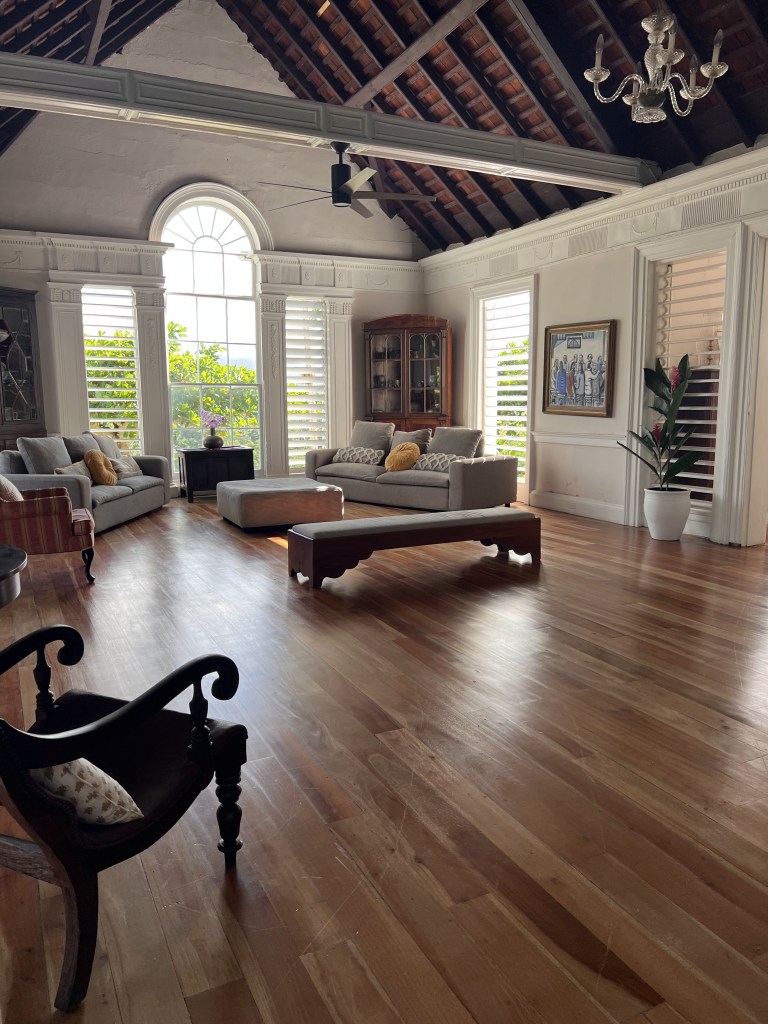
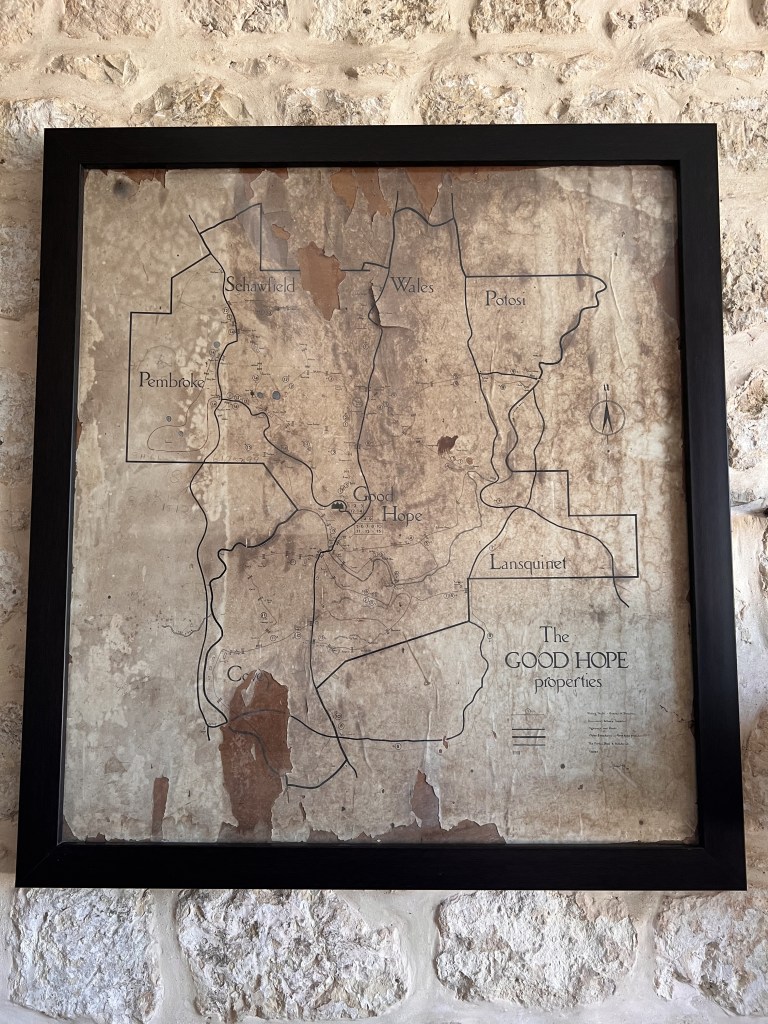
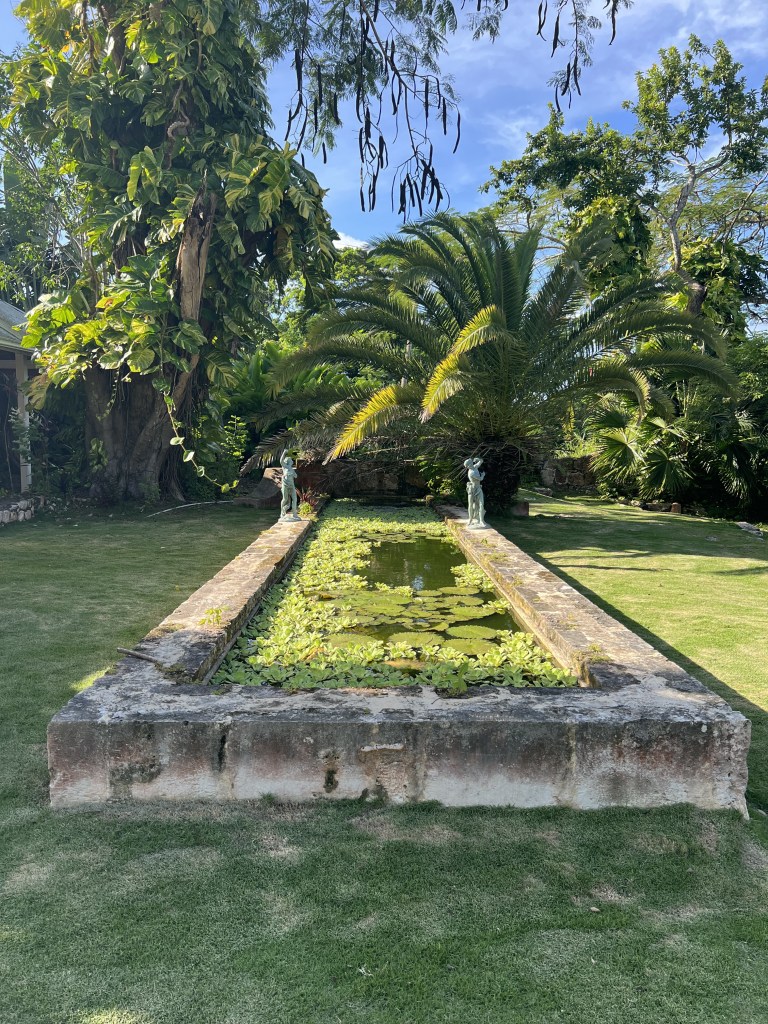
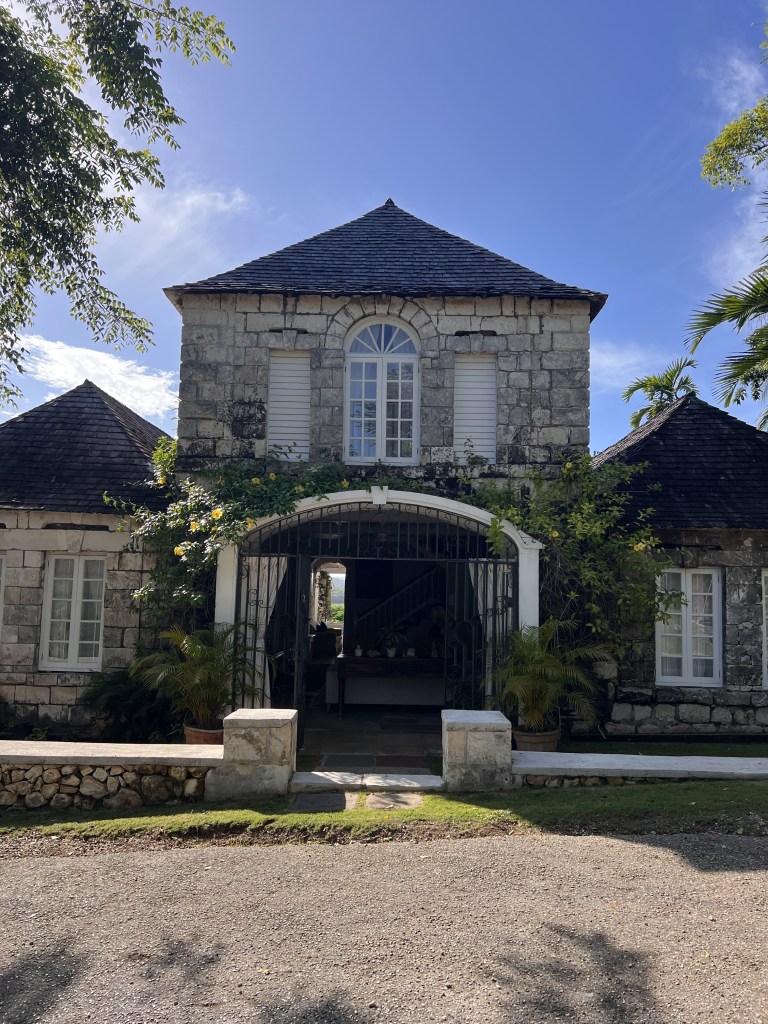
Good Hope Great House located in Trelawny, Jamaica.

Arriving with Hesitations, Leaving with Family

Initially, I felt nervous about attending as the only veteran in the group. But as I met my fellow retreat participants—ten strangers from around the world, all seeking a deeper understanding of themselves—those fears quickly melted away. By the end, they became the family I never knew I needed, and we shared an unbreakable bond forged through mutual vulnerability and support.

Tools for Healing: Breathwork, Movement, and the Power of “Shaking

As a veteran dealing with depression, PTSD, and anxiety, this retreat meant the world to me. Before coming, I was struggling with frequent panic attacks. In Jamaica, I learned grounding techniques like mindful movement, breathwork, and a practice called “shaking”—something completely new to me. When our facilitator first introduced it, I thought she had to be kidding. But as I joined in, shaking for twelve minutes to the beat of music, I felt a profound release, like layers of tension shedding from my body. It was eye-opening to realize how much trauma we hold physically. Now, I shake for twelve minutes each morning as a daily practice to let go of stress and prepare myself for the day.

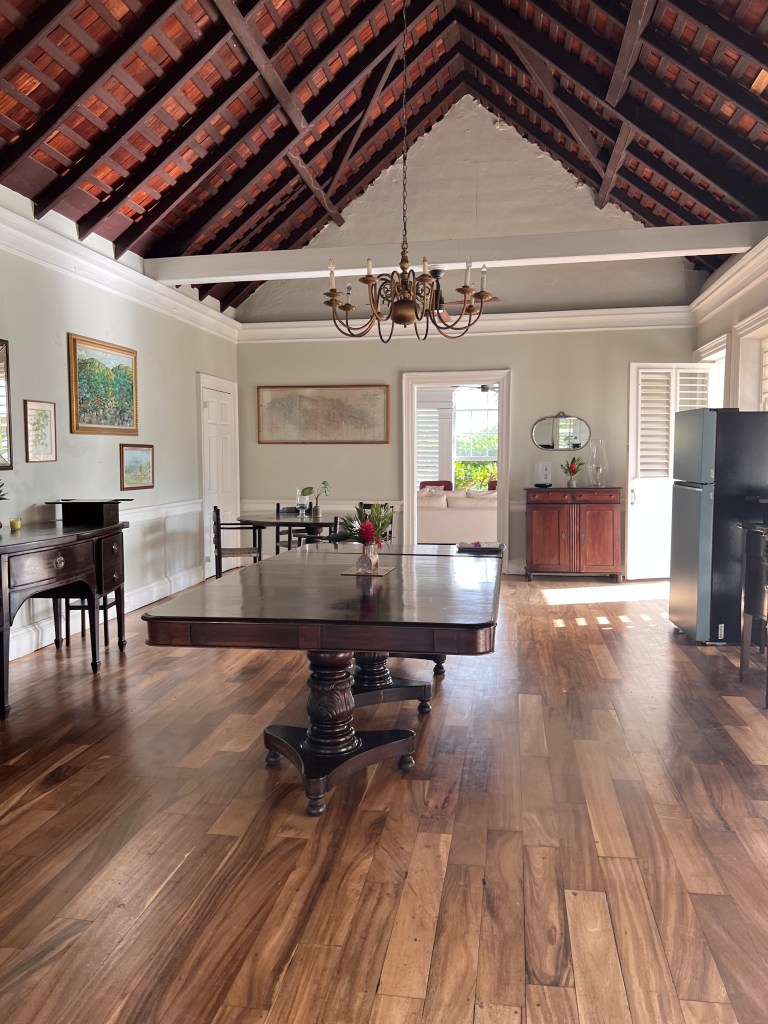
Meals with Heart and Heritage

Every day, we were served three delicious meals prepared at the Good Hope Estate kitchen by three wonderful women. The flavors and aromas were incredible, making every meal a moment to savor. The estate staff, much like the retreat facilitators, exuded kindness and hospitality, making us all feel at home. I even had the chance to meet the estate owner, who expressed honor in hosting our group, which added another layer of gratitude to my experience.
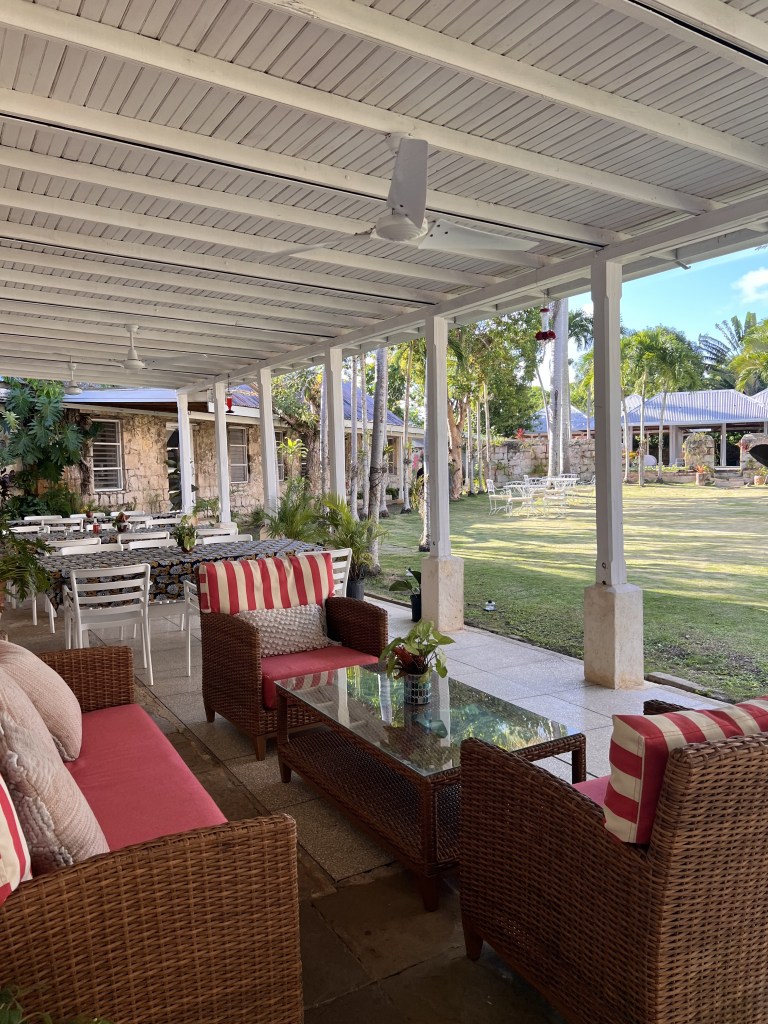
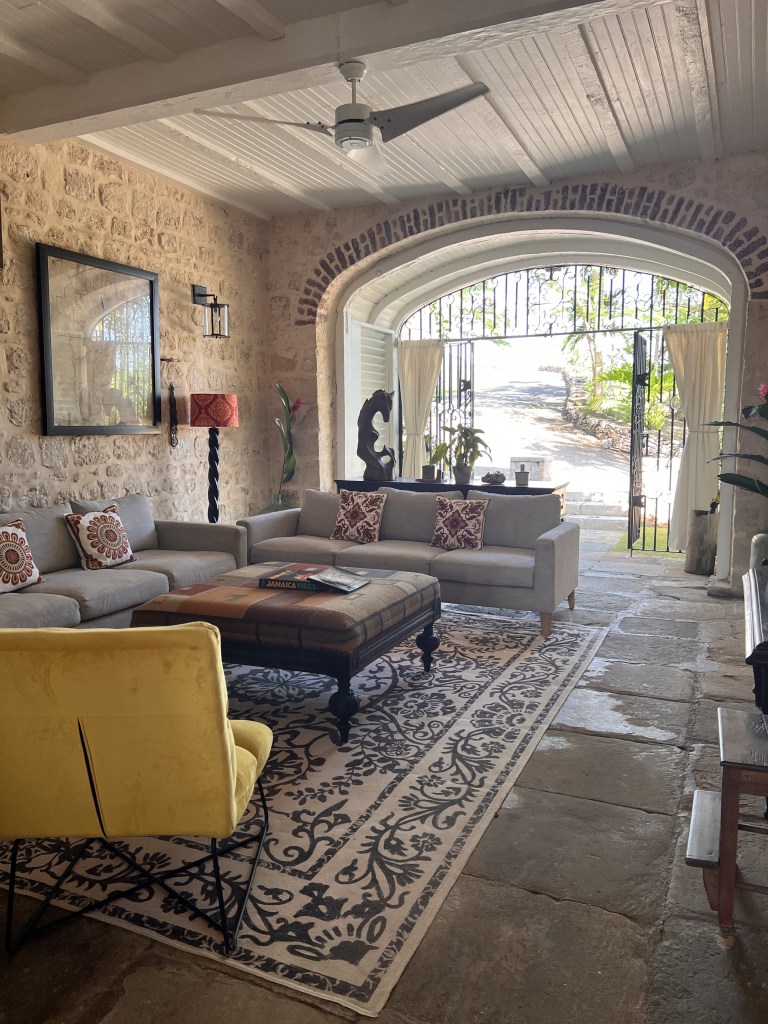
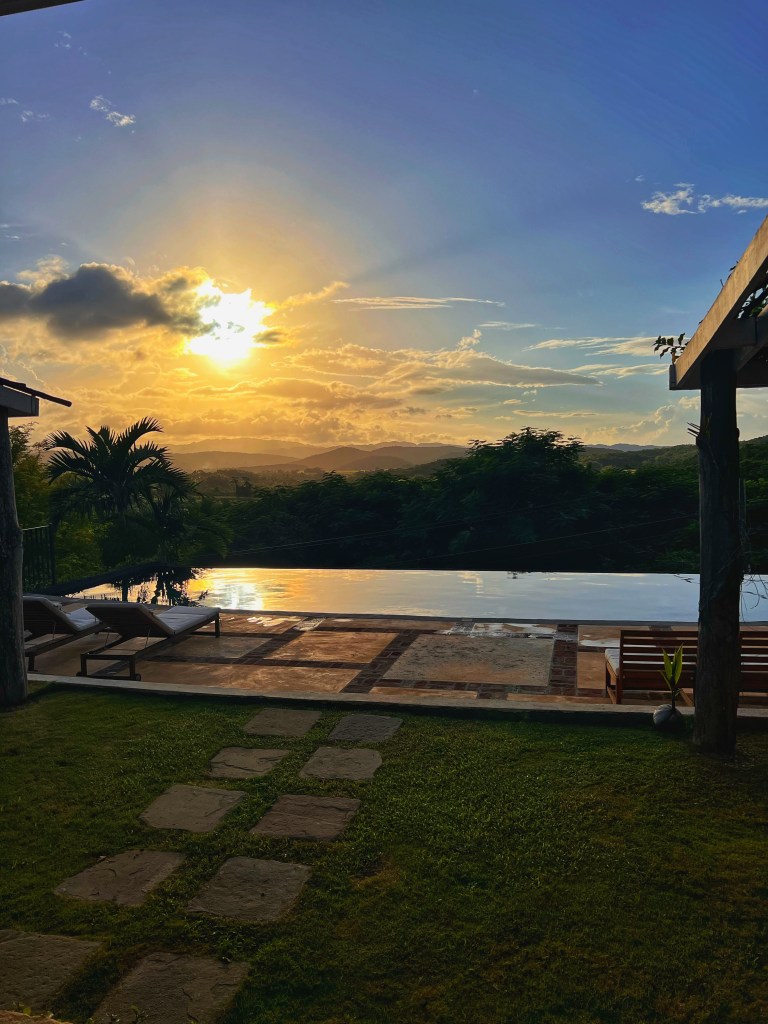
Outdoor Patio where we ate our meals daily

Ceremony and the Power of Setting Intentions

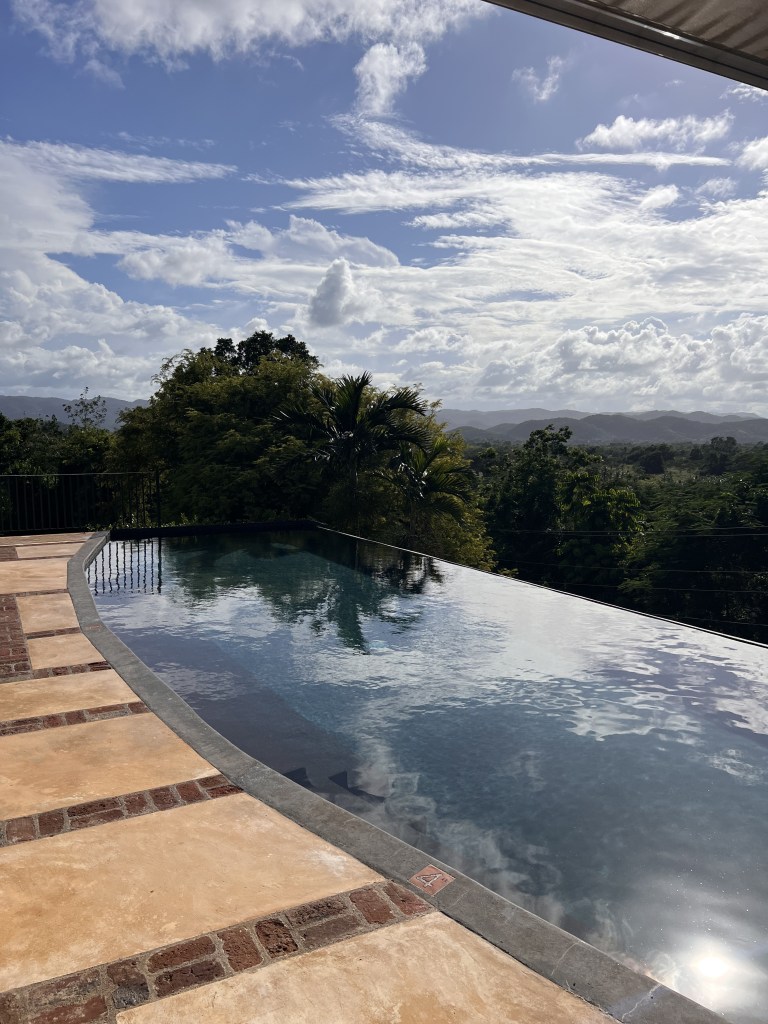
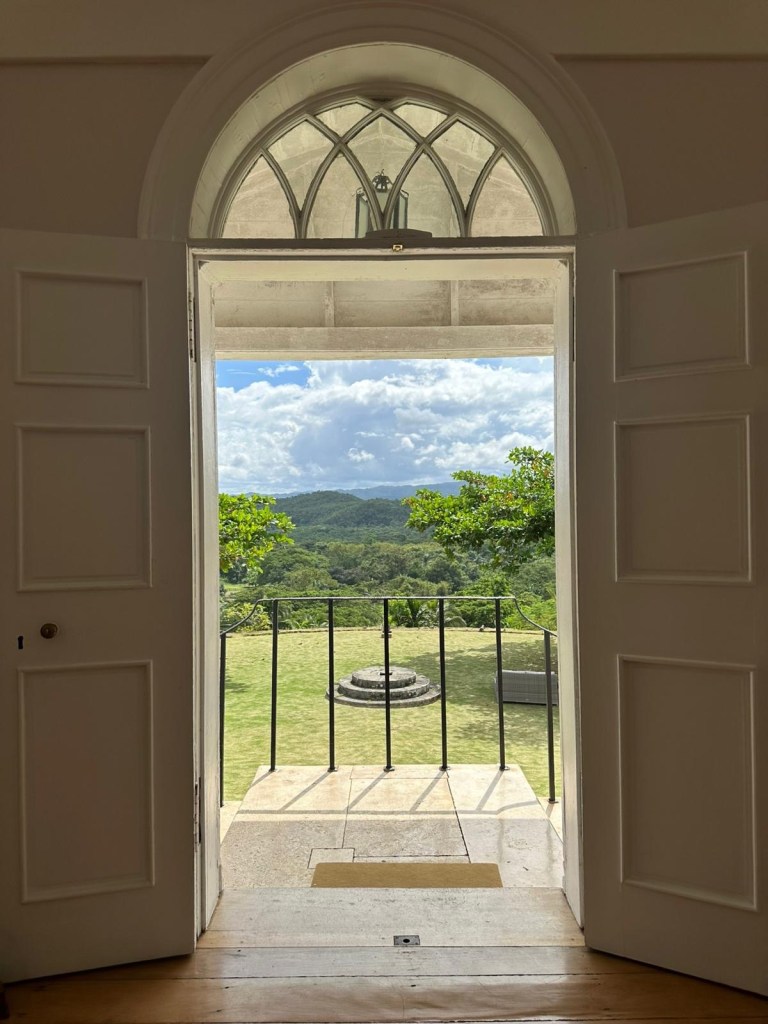
Our facilitators dedicated time each day to help us set intentions and understand the medicinal value of psilocybin. Their expertise made the process feel safe and deeply purposeful. Good Hope Estate, with its historic architecture and open-air spaces, was an ideal setting. Despite experiencing Tropical Storm Raphael, the environment added to the magic. It rained often, but the landscape was so beautiful that the stormy weather felt like part of the experience.
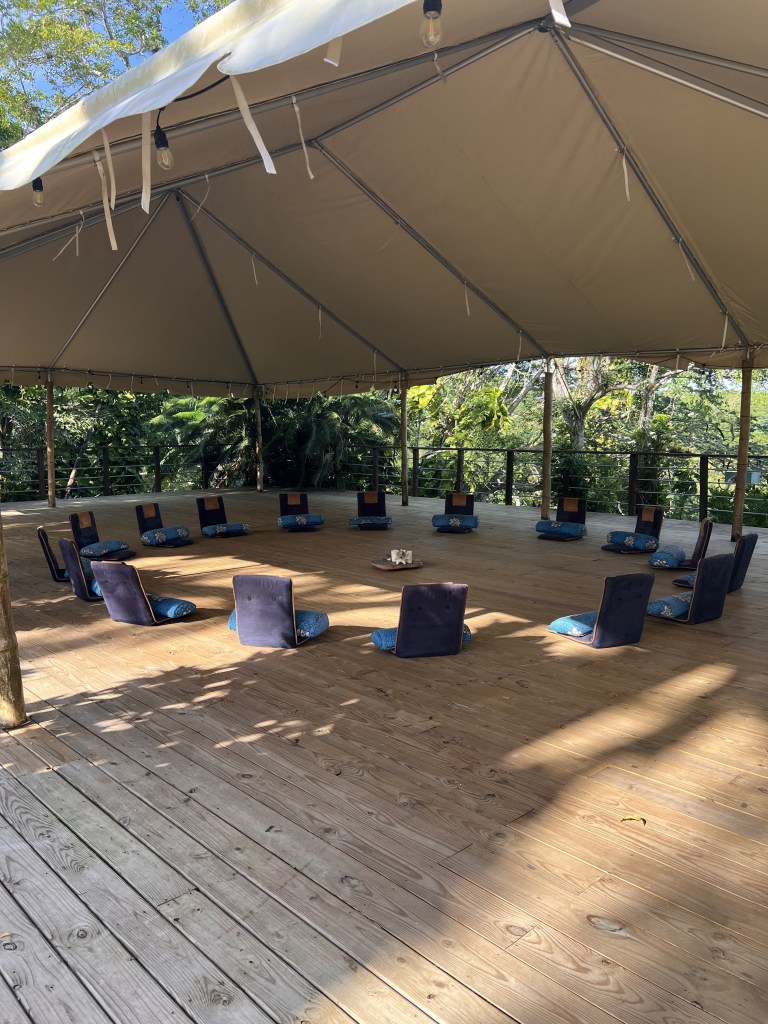
The First Ceremony: A Biblical Storm and Deep Release

During my first psilocybin ceremony, the storm outside seemed almost biblical. Lying under an eye mask, I felt waves of sadness leave my body as I delved deeper into my journey. I could feel myself letting go of old pain I had carried for years. It was intense, and at times it felt like the world was ending, but I trusted the facilitators and surrendered to the experience. This was a major step in my healing process, and while I know there is still work to be done, I am grateful to have felt genuine happiness.
Integration, Community, and Firelight Reflections

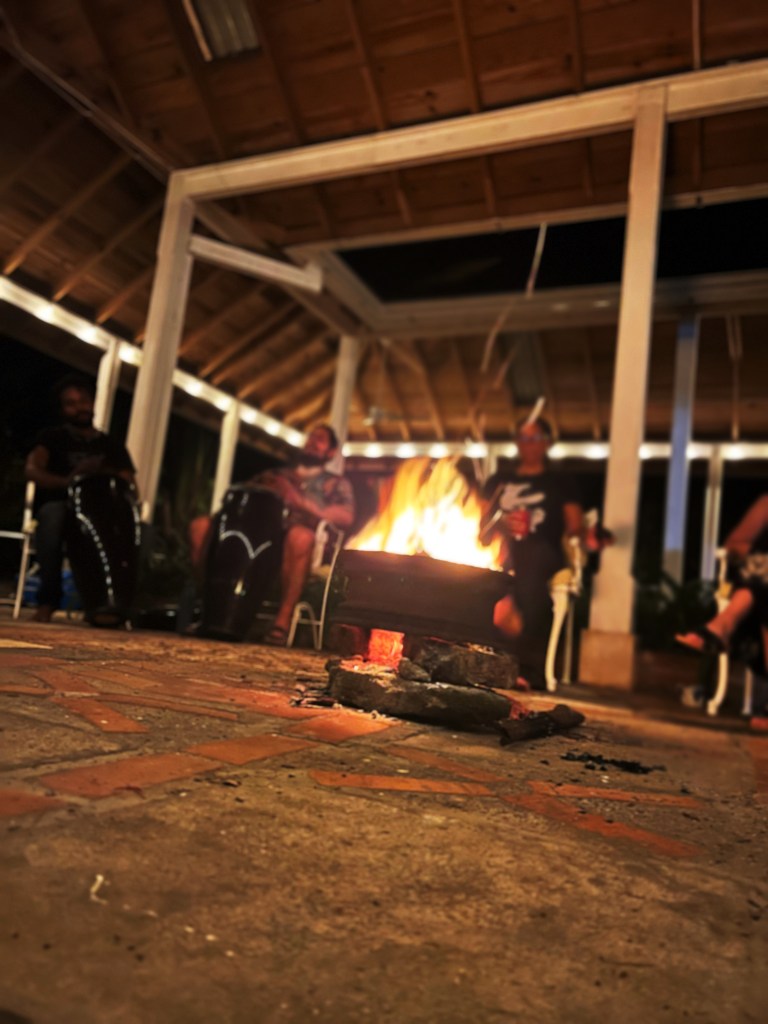
The day following each ceremony was dedicated to integration, with time for mindful movement, journaling, and open conversation. This was where our sense of community grew strongest. In the evenings, we would gather around a fire, sing, and even symbolically toss written worries into the flames—a cathartic release that added to the healing atmosphere.
My Second and Final Ceremony: Finding Lightness and Letting Go.

During my second ceremony, I felt lighter and less weighed down than I had during my first ceremony. I could feel my body shaking slightly, almost like tiny tremors releasing something long held inside. It reminded me of my experiences with ayahuasca, though this felt gentler, more like a subtle unburdening. Midway through, I asked one of the female facilitators if she could sit with me outside—I needed the fresh air, a moment to breathe. As I sat there, clarity began to emerge. I realized it was time to let go of the anger I’d been carrying toward my family since entering foster care at 15, and the resentment I held toward my mother. She had done her best with what she knew, becoming a mother at such a young age, and facing her own painful history. Someday, I’d love to support her, but I know I have my own healing to do first.
At one point, I asked another female facilitator if I could have a hug. She held me for what felt like a lifetime, giving me a kind of warmth and acceptance I didn’t even realize I needed. It was a moment of profound care that I’ll never forget. Later, as the ceremony was winding down, I asked a male facilitator to sit outside with me, and we started talking. I shared some happy memories from my time in the military, and we laughed together. For the first time in a long while, I felt a genuine sense of joy when talking about my service, without the usual heaviness. It was a beautiful reminder of the pride and happiness that still lives within those memories of my military service.

Treasured Memories and Handmade Pottery

One unexpected joy was discovering the handcrafted pottery we used daily for coffee and tea. The mugs were made by the renowned potter David Pinto, whose studio was just a short walk from the Good Hope Great House. I had the pleasure of meeting him and bringing home some of his pottery, allowing me to carry a piece of Good Hope’s spirit back to my family.

Reflecting on this retreat, I am profoundly grateful for the experience, the community, and the lasting friendships that were created. As a veteran who has battled mental health challenges for years, I am filled with gratitude for Beckley Retreats and their commitment to helping us heal in ways traditional care from the VA cannot provide. Psychedelic therapies offer a unique path to healing, and all veterans should have access to this type of care.
My journey is far from over, but experiences like this give me hope and strength to keep moving forward. Thank you, Beckley Retreats, for helping me take one more step on this path.

Special Thanks to:

Heather Mack, Brittney Barela, Kosu (Lead Facilitator), Elizabeth, Eber, Micah, Mandi and Krista.

Always Forward

Through the Lens of Bravery

One of my favorite military occupational specialties (MOS) was photojournalist. Documenting military history fueled my curiosity about who we are as soldiers and the stories that shape us. I had the unique opportunity to interview everyone from incoming soldiers just beginning their careers to general officers holding the highest levels of responsibility. I was always amazed by the pride they displayed when talking about their service. Their eyes would light up as they shared their stories, full of accomplishments and hard-earned experiences.

When interviewing general officers, it was as if you could see the spark of their younger selves, their inner child, as they recounted the challenges and obstacles they overcame while climbing the ranks. Yet, by far, my favorite assignment was photographing airborne soldiers. Witnessing the courage required in the preparation for a jump, knowing the risks, was both humbling and awe-inspiring. As we climbed in elevation, I could see a shift in their eyes—their focus intensifying, their discipline taking over to calm the mind before that leap of faith. It was a privilege to capture these moments.

My last photography jump assignment included a Two-Star General, several Colonels, and Senior Enlisted Noncommissioned officers. These men had been a part of my journey since I was 18; they had mentored me, helping shape me into adulthood. Now, they were all about to jump out of an aircraft. In that moment, I felt a deep sense of bravery in all of us. While I couldn’t tell them how much I cared—it wouldn’t have been professional—I offered them my best smile, silently praying for their safe landing.

As my Airborne battle buddies say, “Airborne, all the way.”

Always Forward

Battling Depression: Finding Strength in Every Struggle

Depression is a battle I didn’t ask for, but it’s one I face with a warrior’s spirit. Some days, it feels like a quiet whisper, barely noticeable. Other days, it roars with the force of a storm. But no matter how it shows up, I’ve learned one undeniable truth: I am stronger than it.

It took me years to understand that battling depression isn’t about pretending everything is fine. It’s about acknowledging the struggle, accepting that there will be difficult days, and choosing to move forward anyway. Resilience isn’t about avoiding the lows—it’s about rising from them.

I’ve been through many storms in life, and each has taught me something different. Some battles have left scars, but those scars tell stories of survival, grit, and growth. I learned to embrace the tools that help me through the rough days: connection with people who understand, therapeutic practices, and finding moments of stillness in the chaos.

For me, depression is like walking with weights on my shoulders—heavy and unyielding. But over time, I’ve realized that I don’t have to carry the burden alone. I’ve learned to lean on the lessons from my military career, where integrity, courage, and honor shaped who I am today. These are the values that keep me grounded, no matter how hard things get.

I’ve faced challenges that pushed me to my limits, both physically and mentally. But it’s in those moments of darkness that I found my inner strength—the part of me that refuses to give up, no matter how tough the battle. Depression might knock me down, but it will never define me.

Instead of letting it drown me, I’ve chosen to live with purpose. To fight for what matters. To take each day one step at a time, knowing that every step forward is a victory in itself. Every setback is a lesson, and every challenge an opportunity to grow.

If you’re walking a similar path, know this: You are not alone, and your resilience is already within you. Keep pushing forward. Find your reasons to rise, even on the hardest days. Because resilience is not about never falling—it’s about always finding the strength to stand again.

And that’s exactly what I’ll keep doing. Always forward.

A Journey of Healing and Resilience

Growing up, I was surrounded by strong military men who guided me into adulthood. They taught me about duty, honor, and resilience. My mother, who was just fifteen when she had me, did her best with the little knowledge she had. I know she loved me, but her youth meant she couldn’t always provide the guidance I needed. Despite this, I don’t harbor any ill feelings towards her or the other adults in my life. They did the best they could with what they knew.

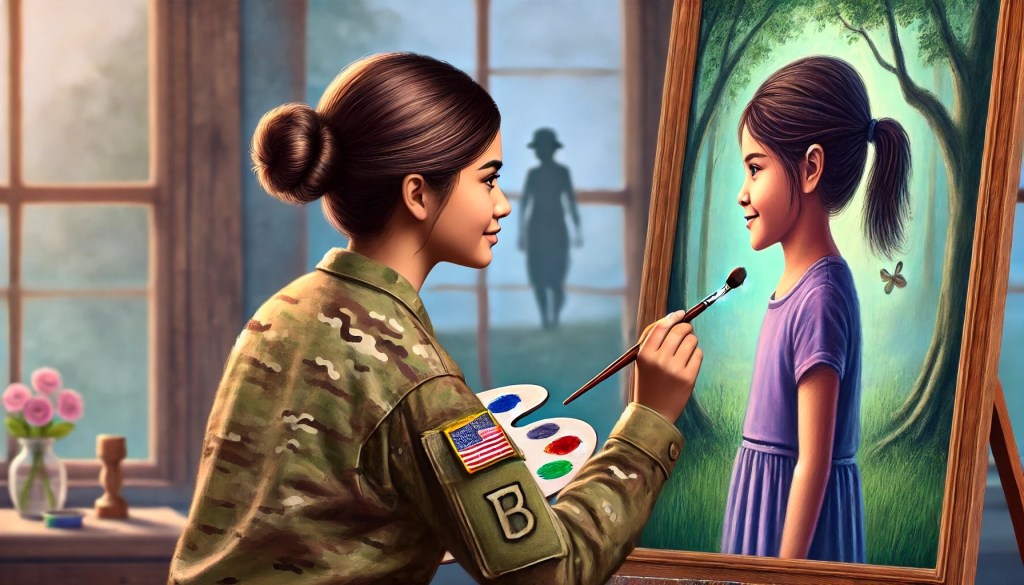
Now, in my mid-40s and having retired from the military ten years ago, I find myself on a different kind of mission. My journey now is one of healing and self-discovery. Through various therapies, I’m learning to retrain my brain and heal the wounds of my past. In many ways, I’m reparenting myself through my children.

Every day, I strive to teach my inner child the values that my military leadership instilled in me—resilience, integrity, personal courage, honor, duty, and respect. I try to pass these lessons on to my children, but I often stumble and make mistakes. There are moments when I feel lost, only knowing what I know and doing the best I can.

However, it’s in these moments of struggle that I find the most growth. The discipline I learned in the military helps me navigate this healing journey. I remind myself that it’s okay to not have all the answers, to not be perfect. What matters is that I’m trying, that I’m committed to healing and growing.

Through this process, I’ve come to understand that healing isn’t linear. It’s a journey with ups and downs, successes and setbacks. But with each step, I’m becoming more whole, more at peace with my past and more hopeful for my future. And in teaching my children about resilience and strength, I’m healing my inner child, one lesson at a time.

And Justice for All

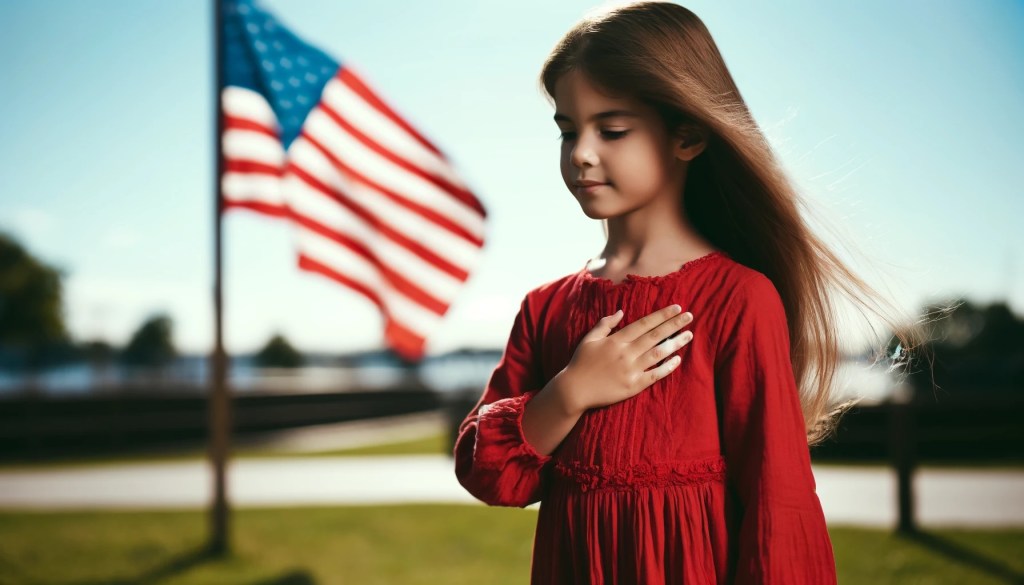
Do you remember the Pledge of Allegiance? “I pledge allegiance to the flag of the United States of America and to the republic for which it stands, one nation under God, indivisible, with liberty and justice for all.” I can’t remember what I ate last week for dinner, but I sure do remember the Pledge of Allegiance I recited every school day in the third grade. Anyway… moving on.

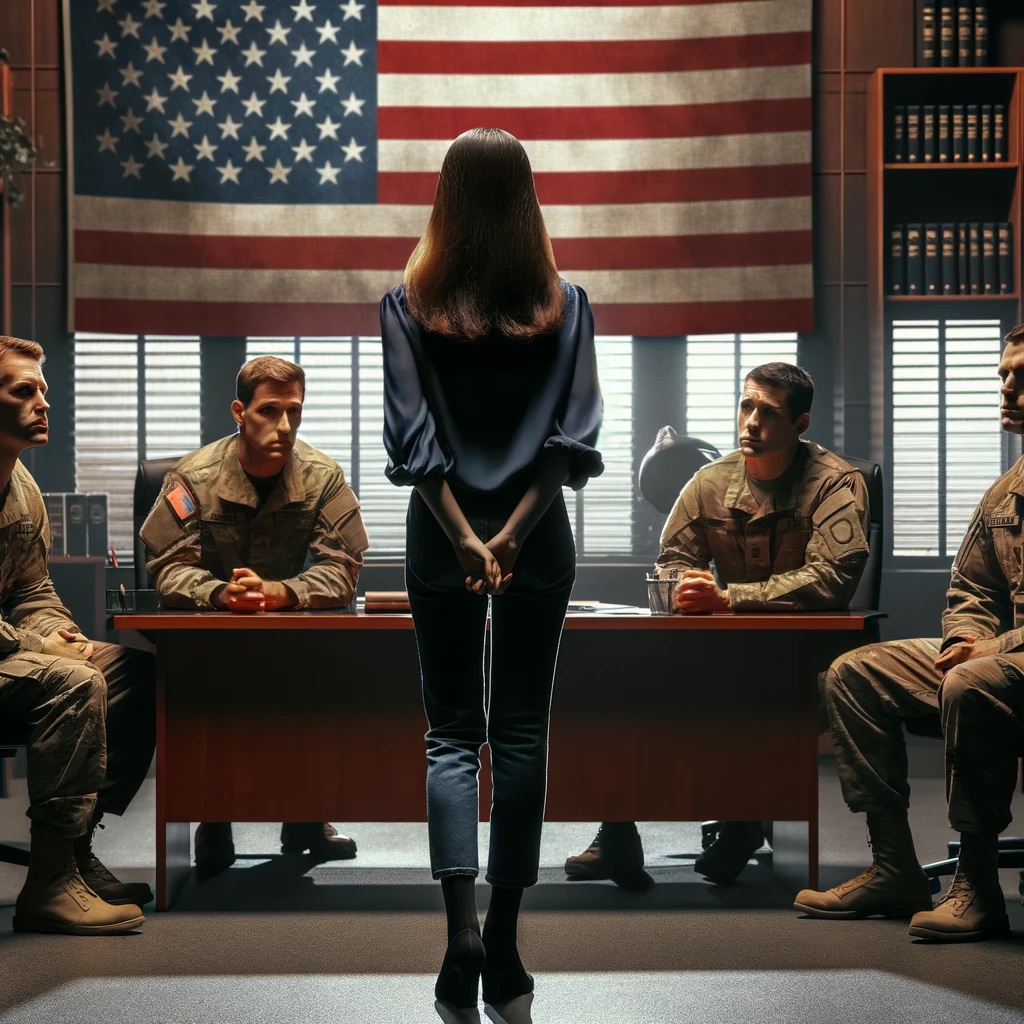
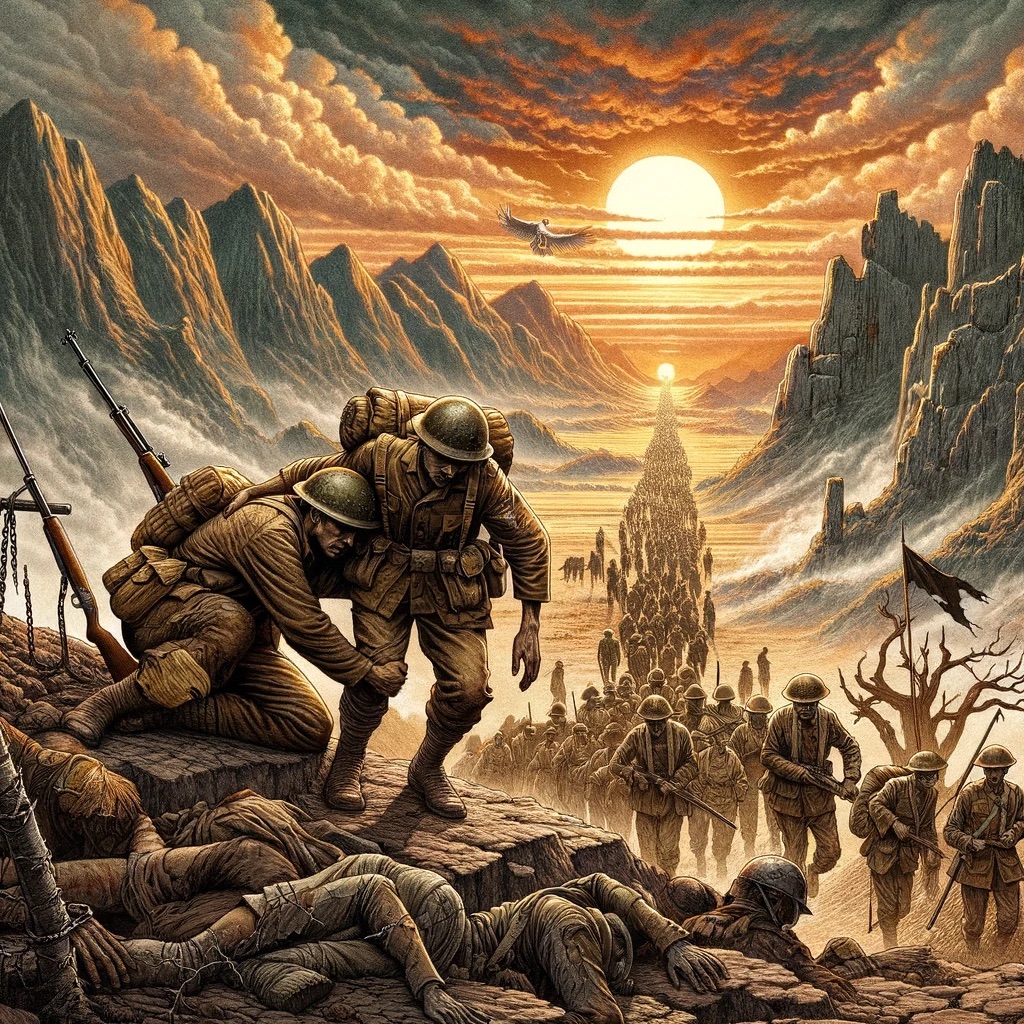
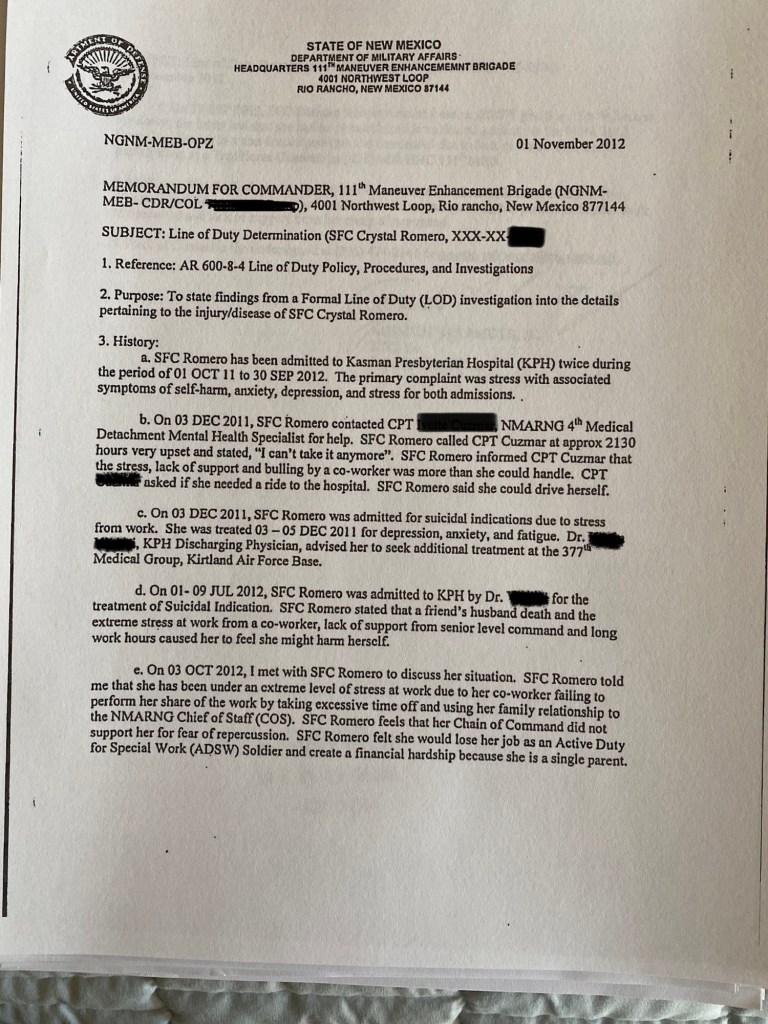
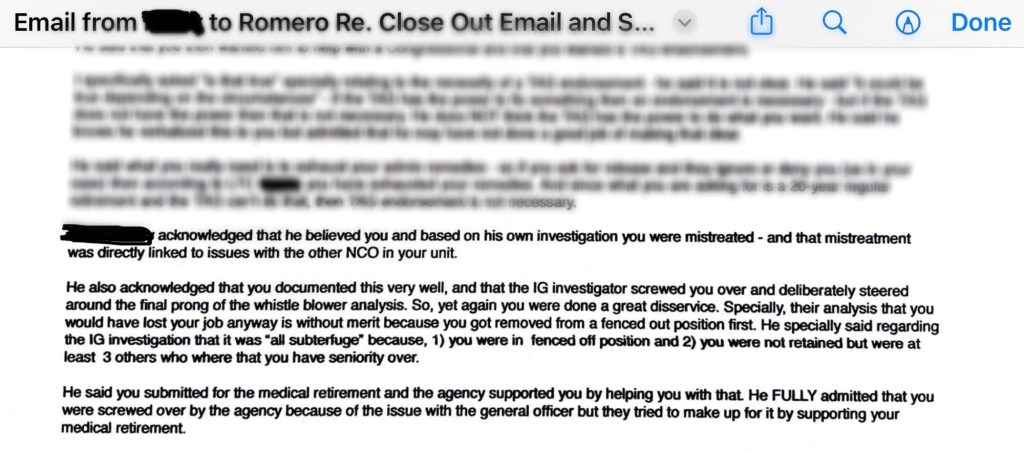
In July of 2020, I met with the leadership of the New Mexico Army National Guard, driven by a need to personally confront them with hard questions about their moral courage, their integrity, their inaction regarding my 2012 whistleblower inspector general complaint, and my wrongful discharge. I asked for a formal review and reconsideration of the “investigation” by the NM Inspector General, and for the restoration of the retirement benefits that were stripped from me. I also requested a meeting with my former leadership, seeking some semblance of the guidance and respect I once believed they embodied. My request was met with silence. These officers and senior enlisted leaders were figures I once revered, symbols of resilience and sacrifice—ideals encapsulated by the shout of “BATAAN” that concluded every meeting, a reference not only to the historic death march that my godfather survived but also to a harrowing battle that epitomizes endurance in adversity. Yet, when it came to addressing grievances from one of their own, those cries seemed to echo in a void, highlighting a disconnect between professed values and practiced behavior.

The battling Bastards of Bataan

What followed was not straightforward engagement but the formation of a board composed of four members—one of whom had previously exhibited bias. Before attending the board, I notified the general counsel of the bias and asked for that member to be removed. The general counsel responded and advised me that the person would be removed. During the board proceedings, instead of addressing the substantial issues raised, the general counsel accused me of creating a conspiracy theory. You can’t create a conspiracy theory about something that’s already been established. This wasn’t just a dismissal but a profound invalidation of my experiences and concerns. To add insult to injury, after receiving hours of my testimony and reviewing over 500 pages of supporting documentation, the general counsel notified me that the previously removed member would now continue to participate and have an opinion on the decision. This is moral injury in its rawest form.

Next steps for me are to submit an application to the Army Board for Correction of Military Records (ABCMR). My quest for justice thus far has drained my savings and tested my resilience. I started a GoFundMe so I could hire an attorney to advise me on how to navigate the complexities of the ABCMR process, as I will need an exception to policy regarding the statute of limitations, hindered by delays and inaction from officials who failed to fulfill my Freedom of Information Act (FOIA) requests. I suspect that the investigation they were supposed to conduct on themselves never actually took place. It’s hard to provide a copy of an investigation that doesn’t exist.

My story lays bare a troubling gap between the ideals that military organizations uphold and the reality of how they may respond when those ideals are called into question by their own members. It prompts a necessary conversation about integrity, accountability, and the support systems within such institutions. How can military organizations foster a culture of true resilience and integrity if they falter at moments that demand these qualities the most? My story isn’t just about a failed engagement by the New Mexico Army National Guard—it’s a reflection on the broader challenges of ensuring that the values we champion are the values we live by.

As I continue this blog, sharing both the triumphs and trials of my military career, I do so not only to document my own journey but also to offer a voice to others who may feel as lost and heartbroken as I have felt. This isn’t just my story—it’s a reflection of many who serve and struggle, who fight battles long after leaving the battlefield. Through sharing, we find strength and perhaps, a path forward together.

Currently, there is no established treatment for moral injury, as it is considered a wound to the soul.

Listen to my full story here: https://www.youtube.com/live/1y75KOPl3FA?si=71jT6DtDn2uh-gGt